Why Wedding Photographers Love Golden Hour

The Photographer's Perspective — Part 7
There's a particular kind of light that wedding photographers are always watching for.
It arrives quietly, usually towards the end of the day, when the sun begins to sit lower in the sky and everything softens. Skin tones become warmer, shadows lose their harshness and even familiar surroundings can suddenly feel cinematic.
That's golden hour.
You'll hear photographers talk about it often, but golden hour isn't about chasing a perfect sunset or disappearing from your wedding for an extended portrait session.
Used well, it's simply a beautiful opportunity.
What Is Golden Hour in Wedding Photography?

Golden hour is the period shortly after sunrise or, more relevant to most weddings, before sunset.
As the sun drops lower, the light becomes softer and warmer than the stronger overhead light we often see earlier in the day.
For photography, that creates a few things we love: gentle highlights, flattering skin tones, beautiful backlighting and a softness that is difficult to recreate at any other point in the day.
It can make a portrait feel effortless rather than heavily produced.
And that distinction matters.
Why Does Golden Hour Photograph So Beautifully?
Light shapes almost every photograph we make.
A spectacular setting in difficult light can be far less rewarding than a simple space illuminated beautifully.
During golden hour, the light comes from a lower angle, allowing us to work with it rather than constantly manage around it. We can place the sun behind you for a soft glow, use it through trees or architecture, or let it fall naturally across the scene.
The setting doesn't have to be extraordinary either.
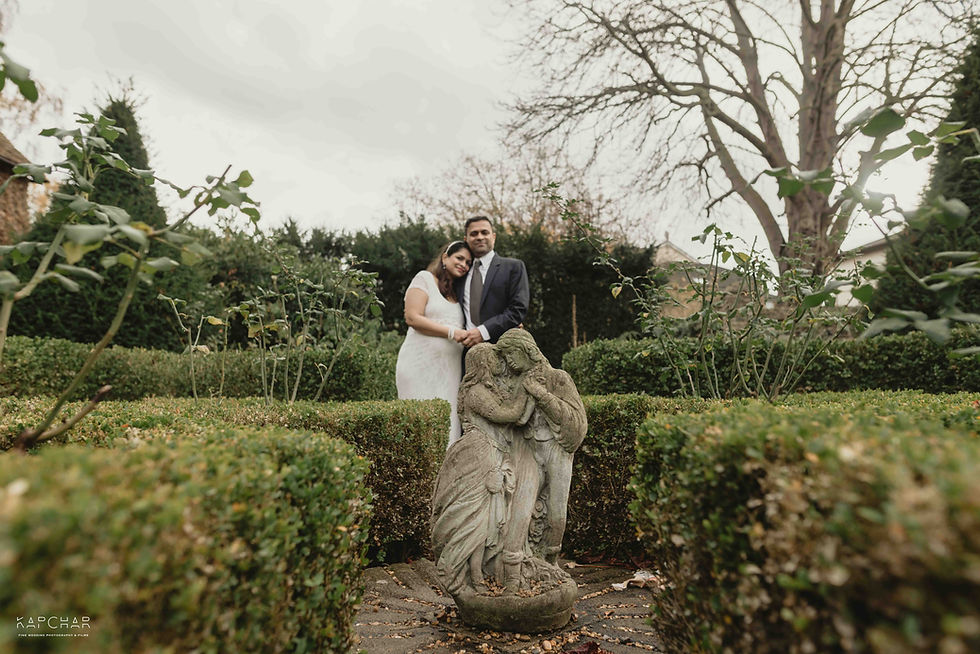
A quiet garden, a pathway beside the venue or an open doorway can become something entirely different when the light is right.
It's something we discuss in Can a Skilled Photographer Make an Average Venue Look Great? often, light matters more than grandeur.
When Is the Best Time for Golden Hour Wedding Photos?
There isn't one universal time.
Golden hour changes according to the season, location and wedding date. At a summer wedding in the UK, the best light may appear well into the evening. During autumn or winter, it can arrive much earlier.
A good photographer will usually have an eye on sunset time while reviewing your wedding schedule.
But that doesn't mean your day should revolve around it.
Ten or fifteen minutes can be more than enough.
Sometimes there's a natural window between dinner and speeches. Sometimes it happens during the drinks reception. Sometimes we simply notice the light changing and ask whether you'd like to step outside for a few minutes.
This flexibility is also one of the reasons we ask couples for their wedding-day timings in advance. You can read more in Why Do Wedding Photographers Ask for Your Wedding Timeline?.
Should You Plan Your Wedding Around Golden Hour?
Not entirely.
Beautiful light is valuable, but your wedding isn't a photography production.
We would never suggest missing an important part of the day simply because the sunset looks promising.
Your guests, speeches, dinner and the natural rhythm of the celebration come first.
Instead, we prefer to leave enough flexibility in the timeline to take advantage of beautiful light if it appears.
That might mean stepping away together for ten quiet minutes while your guests finish dinner or enjoy drinks.
For many couples, it becomes less of a photoshoot and more of a rare pause in an otherwise very full day.
What Happens If There Is No Golden Hour?
Sometimes there simply isn't one.
Clouds roll in. Rain arrives. The venue blocks the horizon. Or the sky stays beautifully soft without ever turning golden.
None of that is a problem.

Golden hour is an opportunity, not a requirement for beautiful wedding photography.
An experienced photographer should be comfortable working with whatever the day gives them.
Soft overcast light can be incredibly flattering. Rain can introduce reflections, atmosphere and depth. A darker evening can open up an entirely different style of portrait.
The best photographs rarely come from waiting for perfect conditions.
They come from recognising what is already there.
Do Golden Hour Wedding Photos Need to Be Posed?
Very little.
We may guide you towards the best light or suggest where to stand, but the aim isn't to turn the moment into an elaborate portrait session.
Walk together. Talk. Take a few minutes away from everyone else.
Often, the reason golden-hour photographs feel so intimate has as much to do with the moment itself as the light.
By this stage of the wedding day, the nerves have usually disappeared. The ceremony is over. Everyone has settled into the celebration.
The portraits naturally feel different.
Are Golden Hour Wedding Photos Worth It?
If the opportunity presents itself, absolutely.
But not because every wedding gallery needs a glowing sunset photograph.
What makes golden hour special is that it gives us another layer to the story of the day: softer light, a different mood and often a few quiet moments between the two of you.
And when all of those things come together naturally, the result can be extraordinary.
Planning Your Wedding Photography?
Golden hour is only one small part of how we approach a wedding day.
Knowing when to use beautiful light, when to give direction and when simply to let a moment unfold is what makes a gallery feel considered without ever feeling overproduced.
If you're planning a UK, South Asian or destination wedding, you can explore our wedding photography portfolio or get in touch with Kapchar to tell us more about your plans.
Frequently Asked Questions
What time is golden hour for a wedding?
It depends on the season and location. In the UK, summer golden hour often falls in the early evening, while in autumn and winter it can arrive as early as mid-afternoon. Your photographer will usually check sunset times against your schedule in advance.
How long do golden hour wedding photos take?
Typically just ten to fifteen minutes. It's a brief, natural pause rather than a separate photoshoot.
What if my wedding doesn't have golden hour light?
That's not a problem. Overcast skies, rain and evening light can all produce beautiful, atmospheric photographs. Golden hour is a bonus, not a requirement.
Do we need to plan our timeline around golden hour?
No. Your ceremony, speeches, dinner and guests should always take priority. A good photographer builds in enough flexibility to catch the light if and when it appears, without disrupting your day.
The Photographer's Perspective series: